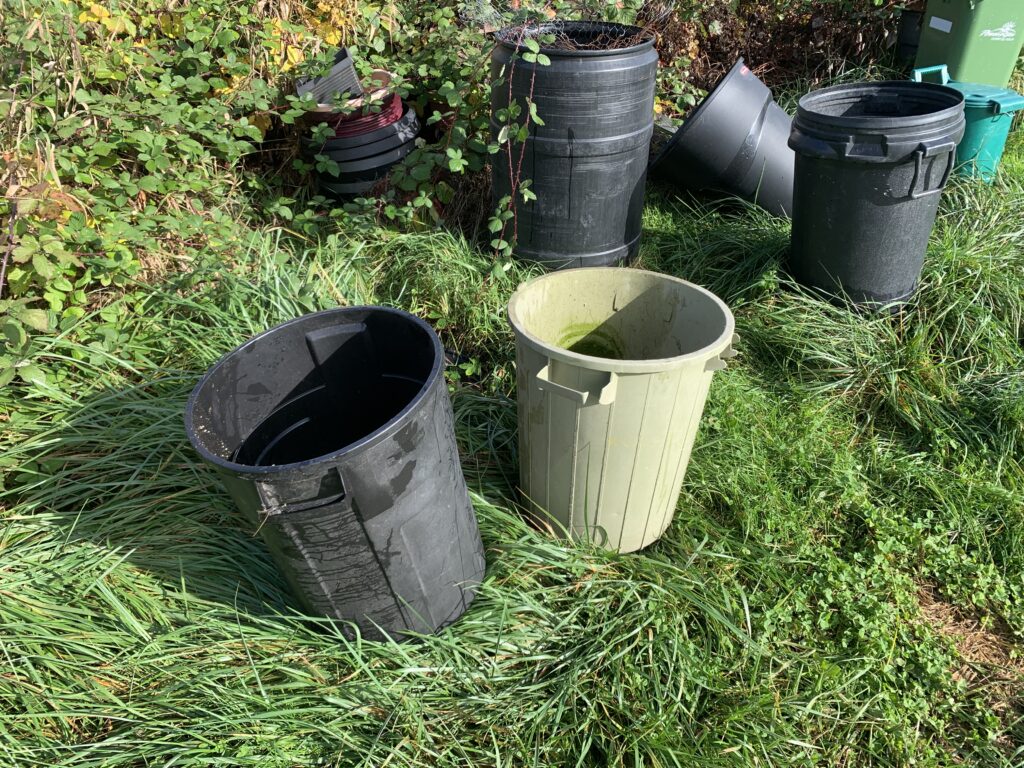
Let chlorinated water sit 24–48 hours (or aerate it) before adding it to compost, worm bins, or compost tea/extract. Or better yet, use rainwater. This simple step supports your microbial workforce.
Chlorine:
- 🚫 Kills beneficial microbes: Even low levels in tap water can reduce the microbial diversity needed for active decomposition.
- 🔥 Slows heating: Fewer bacteria and fungi mean slower breakdown and lower compost temperatures.
- 💩 Reduces nutrient cycling: chlorine harms nitrifying and nitrogen-fixing microbes, reducing available nitrogen.
- 🍄 Inhibits fungal growth: especially mycorrhizal and decomposer fungi key for humus formation.
- ♻️ Delays maturity: chlorine-treated compost often takes longer to reach stability and its rich earthy smell.
➡️ Dechlorinate water to protect life. 💧✨🦠